Configuration
Twin-Head CNC for Profiles: When Two Spindles Pay
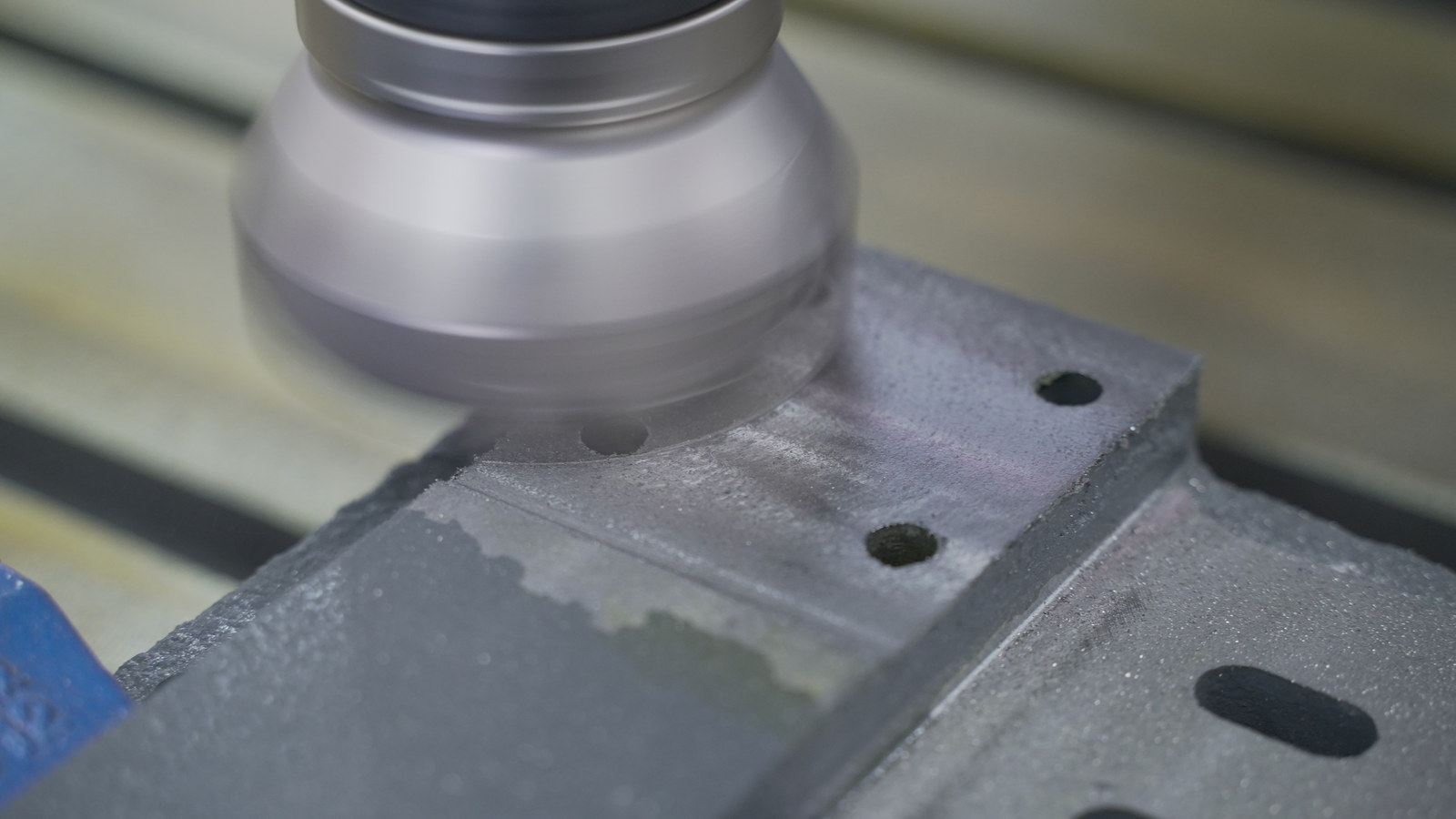
A twin-head profile machining centre puts two independent Z axes and two spindles on one bed. On the OMEX-A3000-2W both heads are BT30, and they can work in sync on one long extrusion or independently on separate zones. The appeal is obvious: two tools cutting at once should shorten the cycle. The reality is more conditional. Whether it pays depends on the length of the part, how symmetric the hole pattern is, how often you change over, and whether your fixturing can hold two cutting zones to the same datum. This note gives a practical test rather than a sales pitch.
1. Where the time actually goes
On a long extrusion with a dense, repeated hole pattern, cutting time dominates and a second head can remove a large share of it. On a short part with a few features, clamping, probing, tool changes and handling dominate — adding a head barely moves the total. Split the cycle into cutting, positioning, tool change and handling before you do any arithmetic. If cutting is less than half the cycle, a second spindle is unlikely to pay for itself.
When a twin-head configuration helps, and when it does not
| Workpiece / production pattern | Twin-head effect | Better alternative |
|---|---|---|
| Long profiles with dense, repeated holes at both ends | Two zones cut in parallel; largest cycle reduction | Twin-head with a fixed zone split |
| Symmetric left/right hole patterns on one datum | Synchronized heads keep both sides on the same reference | Twin-head in synchronized mode |
| Short parts, few features, frequent changeover | Little gain; more setup and program work | Single-head machine with a fast magazine |
| Mixed sections in small batches | Zone programming becomes a changeover cost | Single-head machine with flexible T-slot fixturing |
| Heavy milling in thick-wall steel | BT30 heads are not the right tool for the load | BT40 heavy-duty single-head centre |
2. The datum is the hard part, not the second spindle
Two heads cutting one workpiece share a single coordinate system only if the machine, the fixture and the probing routine all agree. Any twist in the extrusion, any clamp that lifts one end, or any thermal drift between the two Z axes shows up as a mismatch at the zone boundary. Specify how the boundary is handled: either both heads work on features that never cross it, or a probe cycle establishes a common datum before the first cut. Ask to see a measured part spanning the boundary during the acceptance test.
- Define one primary datum face and clamp both zones from it in the same setup
- Keep features that require tight relative position inside a single head's zone wherever possible
- Probe or reference both heads before the first production cycle and after a tool or temperature change
- Measure a sample part across the zone boundary after unclamping, not while it is still held
- For repeat orders, keep a dedicated fixture and a frozen zone-split program per part family
3. Synchronized or independent?
In synchronized mode the two heads follow related paths on one long part — useful for symmetric rails, frames and wide sections where both sides need the same features. Independent mode treats the bed as two work zones, which suits two shorter parts or two different operations at once. Independent mode sounds more flexible, but it doubles the programming, tooling and fixture discipline. Start with the mode your highest-volume part needs and let the rest follow.
4. A short decision test
Answer these five questions from your own production data. If the first three are yes and the last two are no, a twin-head centre is worth a serious test cut. If not, put the budget into stroke, fixturing and tool magazine capacity on a single-head machine instead.
- Is your longest regular part long enough for two genuinely separate cutting zones?
- Is the hole pattern dense or symmetric enough for both heads to stay busy for most of the cycle?
- Do you run that part family often enough to keep a dedicated fixture and program?
- Do you change section geometry several times per shift?
- Do you need heavy removal in steel or thick-wall sections that calls for BT40 torque?
Frequently asked questions
- Does a twin-head machine automatically halve cycle time?
- No. Only the cutting portion can be parallelised, and only if both heads have useful work for most of the cycle. Clamping, probing, tool changes and handling are still there, and zone-boundary checks add a little overhead.
- Can the two heads use different tools?
- They are independent Z axes with their own tooling, so different operations are possible. But each head needs access to the tools it uses, so the magazine and the tool list have to be planned around the zone split.
- Is BT30 enough for both heads?
- For aluminium profiles, drilling, tapping and moderate milling, yes — that is what BT30 is for. If the workload shifts to thick-wall steel or continuous heavy removal, the taper is the wrong starting point and a BT40 machine should be considered instead.
Send us your longest and shortest section drawings, the hole pattern and your daily output. We will tell you whether a twin-head configuration actually shortens your cycle, or whether a single-head machine with better fixturing is the better spend.