Selection
Profile CNC Machine Price: What Drives the Cost
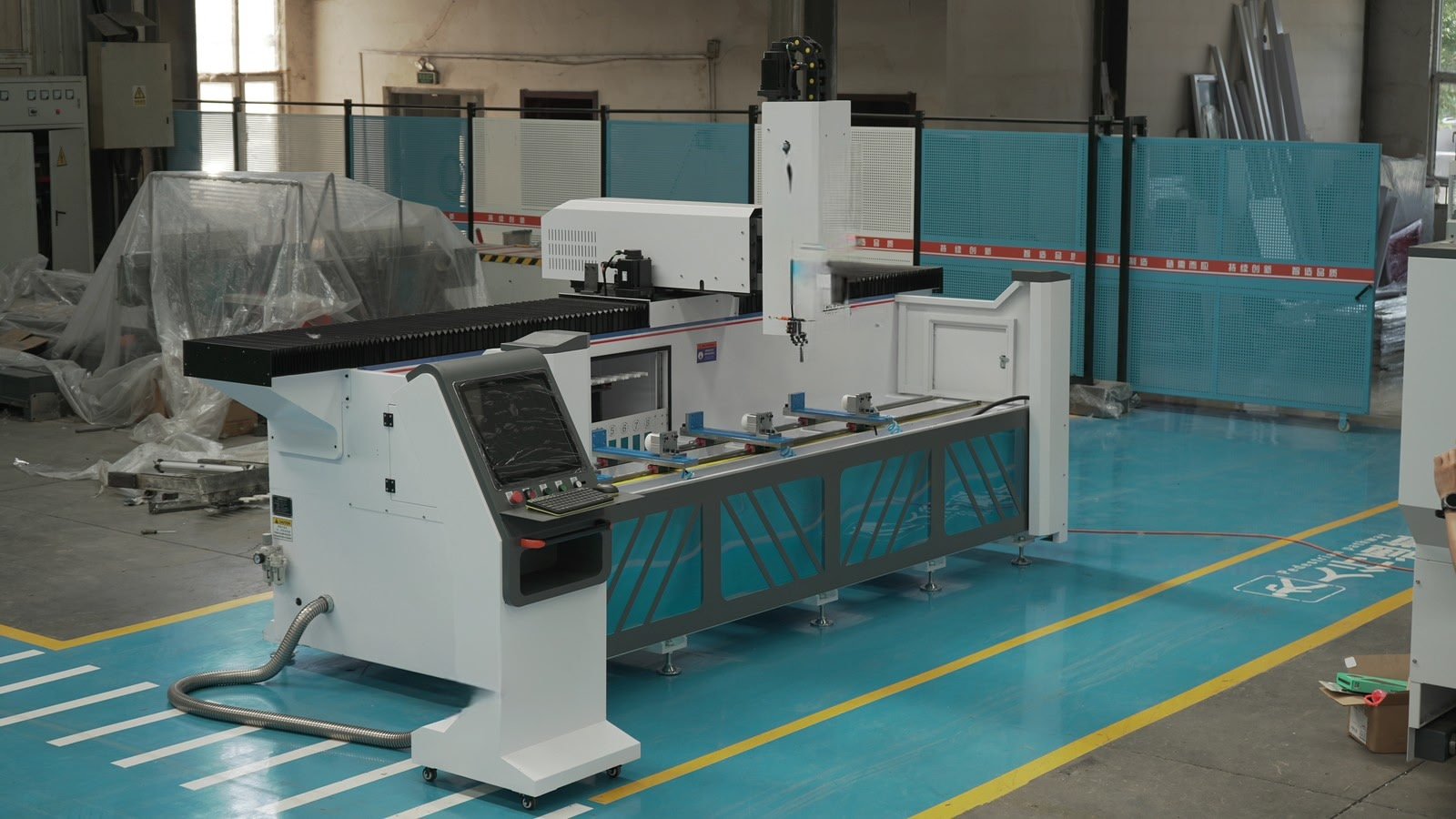
A profile CNC drilling and milling centre is built to a workpiece, not pulled from a shelf. Two machines with the same model name can differ substantially once you change the X stroke, the spindle taper, the number of clamps, the tool magazine, the controller and the destination country's power supply. That is why a single published price is usually misleading. This guide does not list numbers that would be wrong by the time you read them; it explains the cost drivers, shows where buyers accidentally compare unlike machines, and gives you a specification block that produces genuinely comparable quotations.
1. The six items that move the number most
Usable X travel is the first driver: a 3 m machine and a 6.5 m machine are different structures, not a software option. Spindle class is the second — BT30 suits high-speed drilling, tapping and moderate milling on aluminium, while BT40 carries more torque for thick-wall steel and continuous heavy removal. Then come the tool magazine, the clamp count and layout, the controller brand, and any composite process such as fibre-laser cutting. Each is a real hardware change with a real lead time.
Cost drivers and the question to ask about each
| Cost driver | Why it changes the price | What to pin down in writing |
|---|---|---|
| Usable X stroke | Longer bed, larger structure, more guarding and a bigger foundation | Usable machining range, not just axis travel |
| Spindle taper (BT30 / BT40) | Different spindle, drive, rigidity and tooling | Removal rate and materials you actually run |
| Tool magazine capacity | Magazine hardware, changer cycle and tool-holder count | Number of stations and holder standard |
| Clamps and fixturing | Custom jaws, supports and positioning for your section | Who designs and who supplies the fixture |
| Controller and drives | Brand, service network and local spares availability | Named brands and software language |
| Composite options | Laser head, extraction, safety enclosure and integration | Which operations are really needed |
2. Price is not the same as cost per part
A cheaper machine that needs a second setup, a manual deburr station or a longer changeover can lose its advantage in the first year. The useful comparison is cost per finished profile: cycle time, handling steps between operations, scrap from re-clamping, tool consumption and the labour around the machine. Our note on cost per hole sets out a simple way to model this from your own drawing. Ask each supplier for a cycle estimate on the same part so the comparison has a common denominator.
- Use one section drawing, one hole pattern and one daily output for every supplier
- Ask whether the quoted cycle includes clamping, probing, tool changes and deburring
- Separate machine price from fixtures, tooling, freight, insurance, installation and training
- Ask for written prices and lead times on wear parts, not just the initial machine
- Check what local service and spares exist for the fitted controller before comparing on price alone
3. What an imported machine adds
Cross-border buyers should also budget for export packing, ocean freight, insurance, import clearance, a foundation, correct voltage and compressed air, commissioning travel and operator training. These are not hidden extras — they are just often left out of a headline figure. The Incoterm in the quotation determines who carries each of them, so compare quotations only after putting them on the same term. Our FAT and importing checklist covers the documents and acceptance criteria that protect this spend.
4. A specification block to paste into your enquiry
Copy the following lines into a request for quotation and fill in the blanks. A supplier who can answer them with a fixture concept and a cycle estimate is usually one who can build the part. A supplier who replies with a single number and a brochure is asking you to take the risk.
- Profile section drawing and alloy/temper: ______
- Longest and shortest workpiece lengths, and the usable machining range needed: ______
- Hole, slot and thread pattern, including operations per setup: ______
- Materials to be cut (aluminium, copper, U-PVC, steel) and wall thickness range: ______
- Daily output and shift pattern: ______
- Fixturing: who supplies clamps, supports and pallets: ______
- Destination country, power supply and required document package: ______
- Requested quotation term (EXW / FOB / CIF) and whether installation is included: ______
Frequently asked questions
- Why will you not publish a price list?
- Because a machine configured for 3 m aluminium extrusions and one configured for 6.5 m steel and battery-pack work share a name but not a specification. A published number would either be wrong for your part or so broad that it hides the items that actually decide the cost.
- Is a BT40 machine always more expensive?
- Usually, for the same stroke and configuration, because the spindle, drive and structure are heavier. But the right question is whether your material removal rate needs it. Paying for torque you never use does not improve hole quality.
- What is a realistic way to compare three quotations?
- Normalise them to the same Incoterm, the same fixture scope and the same acceptance test, then compare cost per finished profile using a cycle estimate on your own drawing. Our FAT checklist gives the acceptance side of that comparison.
Send us the completed block above with your section drawing. We will return a machine configuration, a fixture concept and a cycle estimate against your own part — a more useful basis for a budget than any price list.