Selection
Importing a Profile CNC Center: FAT Checklist
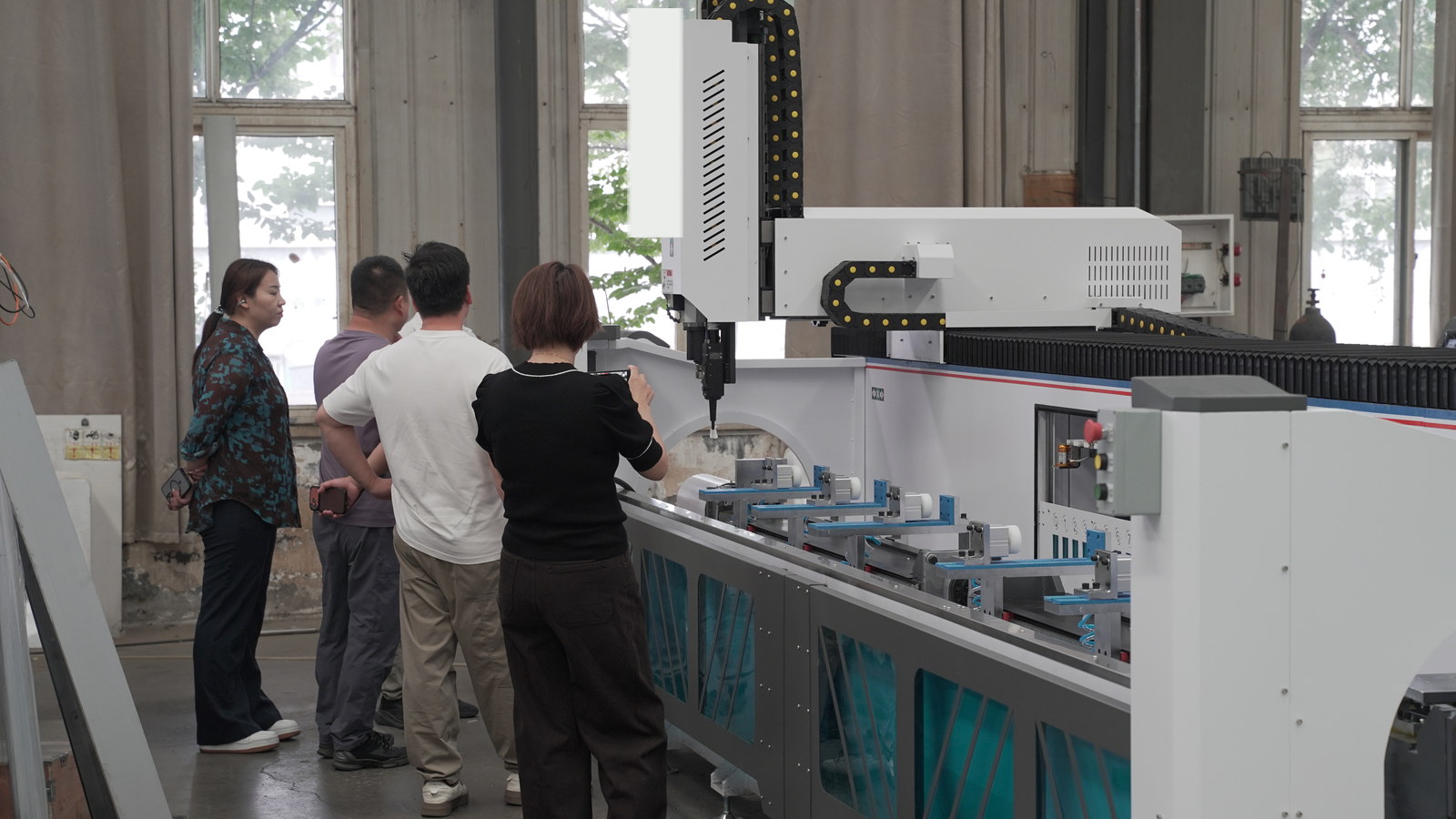
A factory acceptance test (FAT) is a documented trial of the machine you bought, run at the manufacturer's plant before the machine is crated, against pass/fail criteria agreed when the order was placed. It is not a demonstration. Its companion is the site acceptance test (SAT), run after installation at your facility: the FAT proves the machine was built right, the SAT proves it survived shipping and was installed right. For an overseas buyer, the FAT is the single most effective quality gate in the whole purchase, because it catches problems while the machine is still on the builder's floor — before freight, customs and installation costs are sunk, and while corrections are fastest and cheapest.
1. Write the acceptance criteria into the contract, not the email thread
Most disputes about imported machinery are not about broken machines; they are about expectations that were never written down. A verbal promise that the machine will hold ±0.01 mm is not an acceptance criterion. A clause that says the machine will machine a named test piece from the buyer's own extrusion, at a stated tolerance, measured with a stated method after unclamping, is. Agree the test plan at order stage, because asking for a longer loaded run or a specific inspection method on the test day is awkward and usually refused.
- Exact model and configuration: travels, spindle and taper, tool magazine, controller brand, clamp quantity and layout, software version and language
- Core component brands by name — servo drives, linear guides, spindle, controller — checked against serial numbers at the FAT
- The acceptance part: your own profile drawing, your own material, and the features that matter in your production
- Tolerance and measurement method, including whether measurement happens before or after unclamping
- Destination-country voltage, frequency and plug standard, plus the language of manuals and the control interface
- Delivery timeline, payment stages, warranty scope, spare-parts list and response-time commitment
- What happens on a failed test, and who pays for the re-test
2. The FAT: six tests worth insisting on
A credible FAT runs the machine through its full working cycle on the buyer's material, not on the factory's demonstration stock. A machine that performs beautifully on a familiar sample can behave differently on a thin-walled multi-cavity extrusion with a dense hole pattern. Ask for video documentation at minimum; attend in person or appoint a third-party inspector if the order justifies it. Inspection services such as SGS, TÜV or Bureau Veritas are commonly available in Chinese industrial cities and cost a small fraction of the equipment value.
FAT test plan for a profile CNC machining centre
| Test | What to actually do | Pass criterion to agree in writing |
|---|---|---|
| Build verification | Check model, options, component brands and serial numbers against the contract | Every specified item present and labelled; deviations listed |
| Dry run | Cycle unloaded for an agreed period | No alarms, abnormal vibration, noise or overheating |
| Loaded test on buyer's profile | Machine your own extrusion with your own hole pattern and tools | Dimensions within agreed tolerance after unclamping; surface finish as specified |
| Extended run | Continuous production run long enough to expose thermal drift and tool wear | Tolerance held at the end of the run, not only on the first part |
| Safety functions | Physically trigger e-stops, interlocked guards, light curtains and overload protection | All functions operate; not merely pointed out |
| Electrical, software and documents | Check cabinet wiring against schematics, run agreed programs, review manual set | Voltage and frequency match destination; manuals, diagrams and spare-parts list accepted |
Two additions cost nothing at contract stage and are hard to add later. First, agree the duration of the loaded run: a machine that holds tolerance for ten minutes can drift over a full shift, so a longer continuous run is worth negotiating. Second, have the consumables and wear parts fitted to the machine identified by brand and model during the test, so you know exactly what to reorder in year two.
3. Conformity documents: a sticker is not a certificate
Requirements depend entirely on the destination market, so ask which documents apply to your country before assuming a document exists. For the European market, machinery falls under the EU Machinery Regulation (EU) 2023/1230, which replaces the older Machinery Directive; a genuine compliance package normally includes a Declaration of Conformity listing the applicable harmonised standards, a technical file, and safety devices that match the paperwork. A CE mark on the nameplate without supporting documentation does not meet the legal requirement and leaves the importer exposed. Other markets use different schemes — a UL listing or local electrical approval may matter more than CE.
- Ask for the Declaration of Conformity and check the model number and manufacturer name match your machine
- Check the machine has a permanent nameplate with model, serial number, rated power, voltage and applicable markings — handwritten or missing plates cause customs delays
- Confirm safety devices listed in the paperwork are physically present and functional during the FAT
- Ask whether an English (or your local language) manual, electrical diagram and software licence are included
- Verify HS code classification with a licensed customs broker before paying the deposit; duty rates vary widely by classification and origin
4. Packaging, freight and what the Incoterm hides
Ocean transit exposes a machine to humidity and salt air for weeks. The contract should specify anti-rust treatment, moisture-barrier wrapping with desiccant, and an ISPM-15 heat-treated wooden crate with internal bracing and shock protection — and should say who pays if the machine arrives corroded. Precision machinery is normally shipped FCL rather than LCL: sharing a container adds handling cycles and damage risk that no saving on freight justifies.
Incoterms: where responsibility actually moves
| Term | Seller handles | Buyer handles |
|---|---|---|
| EXW | Goods available at the factory | Everything from the factory gate onward |
| FOB | Export clearance and loading at the port | Ocean freight, insurance, import clearance, delivery to site |
| CIF | Export clearance, ocean freight and insurance | Import clearance, duties and inland delivery |
| DDP | Everything including import duties | Receiving the machine at site |
For a first-time importer, FOB with your own freight forwarder gives control over routing and insurance while the supplier handles Chinese export clearance. Whatever term you choose, put the packing standard, the shipping documents (bill of lading, commercial invoice, packing list, certificate of origin) and the responsibility for insurance claims into the contract. Standard payment terms for machinery exports are commonly a 30% deposit with the 70% balance released after a passed FAT and before shipment; a letter of credit adds protection on larger orders. Avoid paying 100% in advance unless there is an established relationship.
5. Installation, training and the first twelve months
Machine performance at your site depends on preparation that happens before the crate arrives. Get the foundation drawing, power requirement and compressed-air specification early; a level concrete base, correct voltage and a planned chip and swarf extraction route prevent most commissioning delays. Clarify who pays for the technician's travel, how many days of commissioning and operator training are included, and whether manuals and training are in a language your operators actually use.
- Warranty duration and exactly what it covers — parts, labour and travel are often separate
- A named critical spares kit shipped with the machine: tool holder clips, limit switches, drive belts, seals, coolant pump parts and spindle bearings as applicable
- Written lead times and prices for wear parts, plus whether common controller-brand parts can be sourced locally
- Remote diagnostic access to the controller, and a stated response time for technical support in your time zone
- Contact details of an existing user of the same model in your region, if available — real operating experience reveals what a factory visit cannot
- Operator training that covers program setup, datum and tool offsets, fixture changeover and daily maintenance
One quiet cost driver is the controller. Systems from globally distributed brands usually have local parts and service networks; lower-cost regional controllers may be perfectly capable but can be harder to support or programme in markets where they are uncommon. Ask which controller is fitted and whether your team can get training and spares locally before comparing two quotations on price alone.
6. One-page checklist to paste into your purchase order
Copy this block into the enquiry or purchase order and ask the supplier to confirm each line in writing. It is deliberately boring: the boring items are the ones that decide whether the first year of ownership is productive.
- [ ] Test cut on our own profile drawing and material, with a recorded cycle time
- [ ] Factory accuracy inspection report for this serial number
- [ ] Named-brand list of core components, verified by serial number at FAT
- [ ] Fixture layout drawing for our cross-section and clamp positions
- [ ] FAT test plan with measurable pass/fail criteria and a signed report
- [ ] Continuous loaded run of an agreed duration, with tolerance checked at the end
- [ ] Declaration of Conformity and applicable documents for our destination market
- [ ] Permanent nameplate with model, serial, power rating and markings
- [ ] English operation, maintenance and electrical manuals; software licence
- [ ] Packing specification: anti-rust, moisture barrier, ISPM-15 crate, internal bracing
- [ ] Incoterm, insurance responsibility and shipping document list
- [ ] Installation, commissioning and operator training scope, duration and cost split
- [ ] Warranty terms, response time and remote diagnostic access
- [ ] Critical spares kit with part numbers and prices; lead times for wear parts
7. What to ask OMEX for before you decide
We build profile CNC drilling and milling centres for aluminium extrusions from 3 m to 6.5 m and for wide gantry work, and we are used to buyer-led acceptance processes. If you send the section drawing, the longest and shortest lengths, the hole and thread pattern, your daily output and your destination country's power supply, we will return a fixture concept, a cycle estimate and the documentation applicable to your market — so you can put a measurable acceptance criterion into the contract rather than a promise.
Frequently asked questions
- Can I skip the FAT if the supplier sends a test-cut video?
- A video is useful evidence but it is not an acceptance test: it rarely shows the machine's own serial number, the measurement method, the condition after unclamping, or behaviour over a long run. Use video as a minimum when travel is impossible, but still agree a written test plan, require a signed report with measured values, and consider a third-party inspector. Inspection services in Chinese industrial cities typically cost a small fraction of the machine value.
- What is a realistic accuracy acceptance criterion for long profiles?
- State it as a measurement on your own part, not as a machine specification. For example: hole position within ±0.10 mm relative to the defined datum on a 4.5 m extrusion, measured after unclamping at a stated temperature, over a continuous run of an agreed length. Also distinguish local point-to-point repeatability from absolute position over the full span — they are different problems, and a single ±0.01 mm figure in a brochure does not answer either.
- Is CE marking required if the machine is not going to the EU?
- No — CE is a European conformity marking, and for the EU market the applicable framework is the Machinery Regulation (EU) 2023/1230. Other markets have their own electrical and machinery safety requirements, and a CE sticker is not a substitute for them. Ask which documents apply to your destination, verify the Declaration of Conformity names your exact model, and confirm the physical safety devices during the FAT.
- Who pays for the installation technician's travel?
- Whatever the contract says, so make it explicit. Some suppliers include commissioning and training in the machine price, others charge a daily rate plus flights and accommodation. Clarify the number of days, what the technician will do, who provides local labour and lifting equipment, and whether training manuals are in your operators' language — before the balance payment, not after the machine lands.
- What belongs in the spare parts kit shipped with the machine?
- At minimum, consumables and wear items identified by brand and part number during the FAT: tool holder clips, limit switches, drive belts, seals, coolant pump parts, filters, and any machine-specific clamps or inserts. Agree prices and lead times in writing. Also confirm whether the controller and drives are from a brand with local service in your country — that often matters more to uptime than the size of the kit.
- Should the 70% balance be paid before or after the FAT?
- Common machinery export terms are a 30% deposit on order and 70% before shipment, after a passed FAT and pre-shipment inspection. That sequencing is the buyer's main leverage: releasing the balance before the test removes the incentive to fix anything the test finds. For larger orders, a letter of credit released against shipping documents adds another layer of protection.