Process
Battery Pack Dismantling CNC: Process & Safety
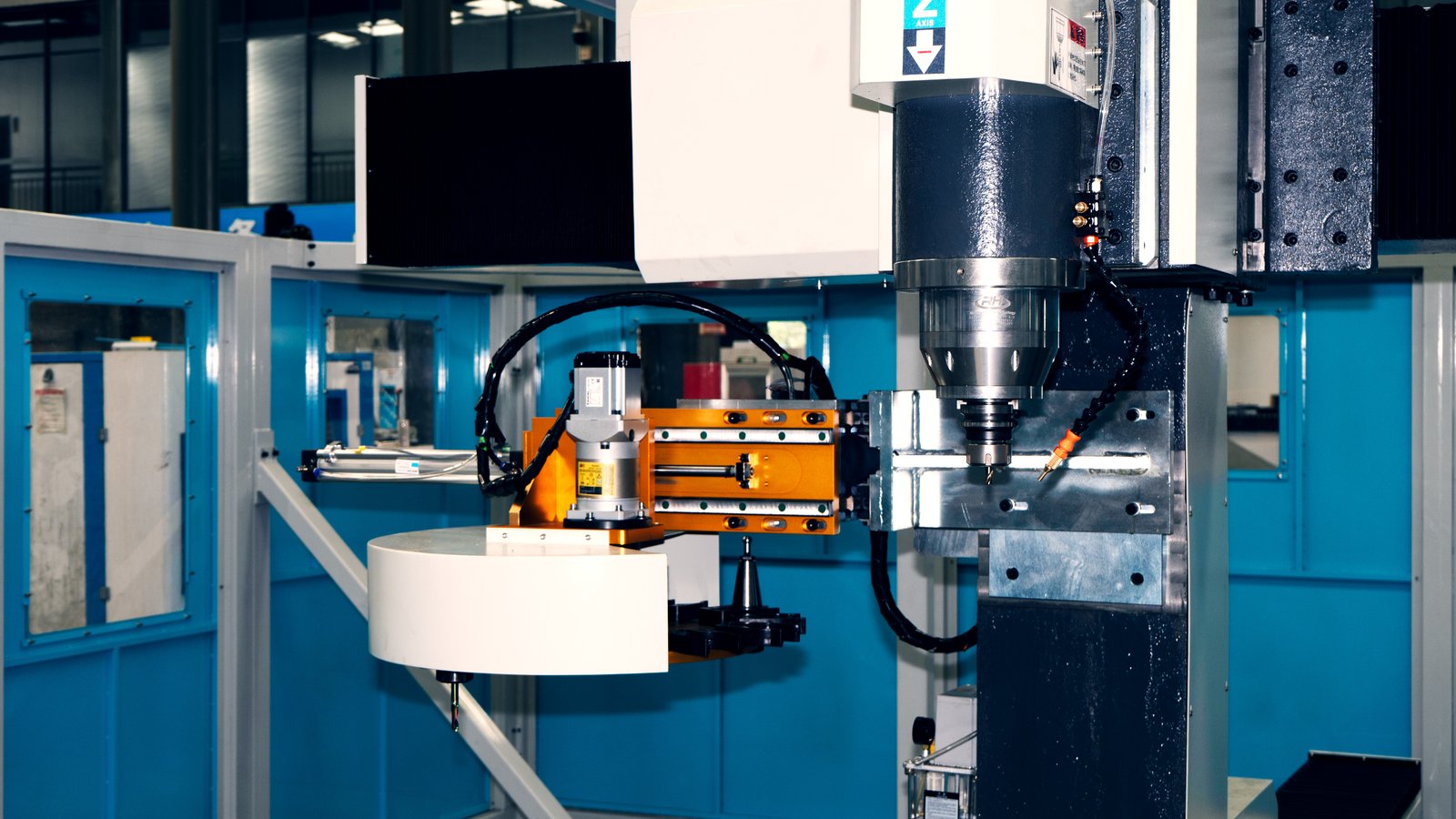
Dismantling an end-of-life EV battery pack is a machining job before it is a recycling job. The pack arrives as a sealed assembly of aluminium extrusions, steel or composite covers, busbars and module fasteners; something has to remove the tabs, open the enclosure and free the modules without cutting into a live cell. A gantry-type CNC centre does this with a controlled tool path, a guarded work envelope and a repeatable datum — the same logic as any other profile machining operation, but with much less tolerance for heat, sparks and loose swarf. This note sets out what is actually cut, what the enclosure has to handle, and what to write into a technical agreement.
1. What the machine actually has to cut
Most of the material is aluminium: extruded side rails, end plates, cooling-channel sections and the tray structure itself. The operations are shallow milling of busbar tabs and weld seams, drilling out rivets and fasteners, slotting adhesive-bonded covers, and cutting a defined opening line around a lid. Cuts are usually short, interrupted and position-critical — the tool must stop at a known depth above the cells. That makes depth control, a rigid gantry and a probing routine more valuable than raw spindle power.
- Mill busbar tabs and interconnect lands to a specified remaining thickness, not to a visual endpoint
- Drill or mill out rivets, bolts and spot-weld buttons holding the lid and module brackets
- Cut a controlled opening line in the enclosure with a defined depth stop and a protected underside
- Face or skim a distorted tray rail to create a flat datum before any deeper cut is attempted
2. Enclosure, extraction and explosion-proof design
A battery pack that has not been fully discharged and verified can still release heat, and machining aluminium generates fine conductive chips. The machine therefore needs a fully enclosed guard, local extraction at the cutting point, chip collection that keeps swarf away from electrical parts, and a control strategy for stopping the cycle if extraction fails. On our C3016 and C3027 gantry centres the work zone is enclosed and the enclosure, extraction and safety configuration are agreed as part of the machine specification rather than added on site. Ask any supplier to state these items in writing.
Safety items to agree before a battery dismantling machine is built
| Risk | What to specify | How to verify at acceptance |
|---|---|---|
| Conductive aluminium swarf reaching cells or busbars | Enclosed cutting zone, directed extraction, sealed chip collection, no dry sweeping | Run a loaded test cut and inspect the collection path and enclosure seals |
| Heat and sparks at the cut | Depth-limited tool paths, tool condition monitoring, MQL or agreed cooling method | Record spindle load and surface temperature during a witnessed cycle |
| Unverified pack state | Written incoming-discharge and isolation procedure before the pack is clamped | Review the procedure as part of the FAT documentation |
| Unexpected live contact | Insulated fixturing, defined earth bonding, emergency stop reachable from the operator side | Function-test every interlock and E-stop with the enclosure closed |
3. Gantry centre or a converted milling machine?
A converted general-purpose mill can cut a single pack, but pack formats vary in length and width and the fixture is often wider than a standard table. A gantry centre gives a wide, open work envelope, a long X stroke, and room for a full-perimeter clamp and a chip conveyor underneath. It also keeps the operator outside the guard during the whole cycle. The trade-off is floor space and cost: if you only process one pack geometry in low volume, a simpler enclosed cell may be the honest answer.
- List the longest, widest and tallest pack you will accept, including any shipping frame still attached
- State whether the pack is clamped on the tray rails or on a dedicated pallet, and who supplies the pallet
- Require a depth-reference strategy: probing, a fixed stop, or a scanned surface before the cut
- Ask for a cycle time on your own pack geometry, not on a clean demonstration sample
- Confirm what happens to swarf and offcuts, and who removes them between cycles
4. What to send with the enquiry
The fastest way to a usable proposal is a pack drawing or a measured envelope, a description of the opening and tab-milling operations, the state of the packs on arrival, the daily throughput, and the safety rules that apply at your site. From that we can return a fixture concept, a guarded work envelope and a cycle estimate. Avoid asking for a machine that handles every pack type ever made — a defined envelope with a defined clamp is both cheaper and safer.
Frequently asked questions
- Can the same machine also machine new aluminium profiles?
- Mechanically yes, if the work envelope and spindle suit the section. In practice a battery-dismantling cell is configured around extraction, guarding and swarf handling that a normal profile job does not need. Decide which job dominates before fixing the specification.
- Do you need a BT40 spindle for this work?
- Not for shallow tab milling alone. BT40 becomes relevant when the gantry is also expected to cut thick steel sections or remove a large volume of material in one pass. Choose by material removal rate and rigidity, not by pack size alone.
- Is laser cutting used to open the enclosure?
- It can be, on a composite machine, but it adds its own fume and fire-control requirements. For most dismantling lines a mechanically depth-limited milling path is easier to validate and to keep within a defined safety case.
Send us the pack envelope, the operations you need and the site safety rules. We will come back with a machine configuration, a fixture concept and the extraction and guarding items to put into the technical agreement.